We make custom gates to order for Central Coast driveways, entries and gardens. Every opening is a little different, so your gate is built around the size, style and material you want.
People come to us for all sorts of reasons. Some want more security or privacy at the front of the home. Others want better street appeal, or a safe way to keep pets and children inside the yard. Many are simply replacing a gate that has dated and no longer suits the property.
This page walks you through the main decisions. You can compare gate materials, understand when approval may be needed, check what applies to gates forming part of a pool barrier, and weigh up manual against automated operation.
Custom gates are one of the services we offer as a garage door supplier on the Central Coast.
When you are ready, get in touch to arrange a consultation and site measure.
A custom gate is designed and made to fit a specific opening, style and material preference. A standard gate is an off-the-shelf product made to a set size.
With a custom gate, the opening is measured first. The gate is then designed, fabricated or sourced to suit, and installed on site. Material choice is part of that process, and automation can be added as an option.
Few gate openings are standard sizes. Because of this, almost all gates are effectively made to order, even when they start from standard templates.
Custom gates cover two common types:
A standard product can work where the opening happens to match. A custom build suits you better when the opening is an unusual width or height, when the ground is sloped or curved, or when you want a particular style and material combination.
Most custom gates are made from steel, wrought iron, aluminium or timber. Each one brings different trade-offs in durability, appearance and upkeep.
Timber gives you plenty of design flexibility. It does need regular maintenance, though, as timber can twist or warp over time.
Steel and wrought iron suit heavier, more traditional designs. Industry guidance indicates both are susceptible to rust, and they may not be the best option near the coast.
Aluminium is rust-resistant. It is commonly recommended for coastal properties for that reason.
Salt air is worth thinking about if your property sits near the water. It is a real consideration for Central Coast homes, and it often shapes which material makes sense for you.
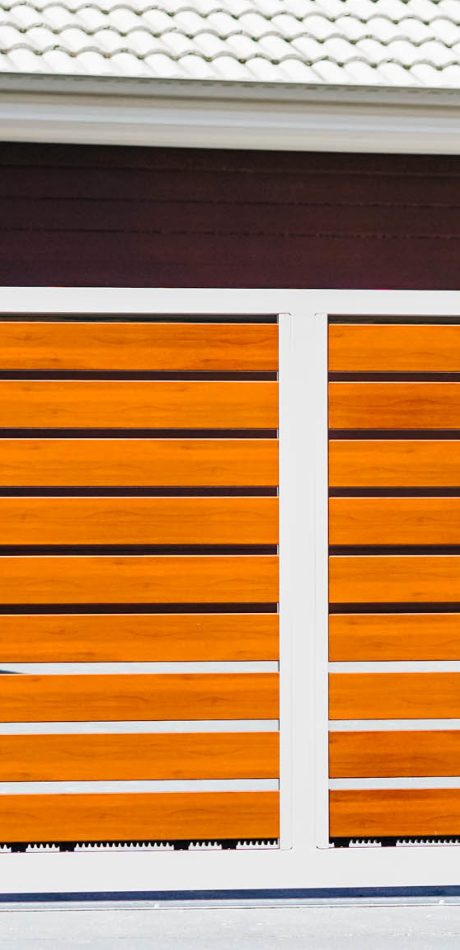
The style of the gate matters too, not just the material. A solid gate blocks the view into your property. Open metal styles, such as slats or pickets with gaps, let light and airflow through but offer less privacy.
Start with what matters most to you. If upkeep is the priority, a low-maintenance material suits. If privacy is the priority, a solid style suits. If your property is exposed to salt air, that will narrow the material choice further.
Approval is one of the first things people ask about. In NSW, fences and gates can generally be built without planning approval as exempt development, but only when they meet specific standards.
Those standards cover things like:
On land designated bushfire-prone, the exempt-development requirements call for non-combustible materials or hardwood. Parts of the Central Coast carry that designation, so it is worth checking whether it applies to your address.
Exempt-development status does not apply everywhere. It does not apply on heritage-listed land, or within certain conservation-area setbacks. In relevant zones, it also does not apply in foreshore areas or on flood-control lots. Where exempt development does not apply, your gate may require a Development Application.
You can check the official conditions in the NSW Department of Planning and Environment fact sheet, Fences: Rules for exempt and complying development. It sets out the height, material, bushfire-prone and foreshore or flood-lot conditions.
None of this is legal advice. The point is simply to check your own property's circumstances early, rather than assuming every gate needs approval or that none do.
Where a gate forms part of a pool barrier, different rules apply. Pools and spas in NSW must have a child-resistant barrier that complies with the Swimming Pools Act 1992, the Swimming Pools Regulation 2018 and AS1926.1-2012.
For the gate itself, that means:
These requirements apply to gates forming part of a pool barrier. They do not apply to driveway or garden gates generally.
If your project involves a gate within a pool barrier, tell us at the consultation so the design accounts for it. This is not legal advice, so check your own obligations with your council.
Automation, sometimes called motorisation, is an optional addition to a custom gate. It lets you open and close the gate using a remote or a keypad.
An automated gate involves added hardware and wiring compared with a manual gate. A manual gate is simpler, with no motor or electrical connection.
Household electric gate drives are covered by AS/NZS 60335.2.103. This standard addresses the electrical and mechanical safety hazards associated with the movement of the gate.
Think about how you use the entrance. If you pass through it often by car, or the gate is heavy, the convenience of remote or keypad access may suit you. If the gate is used less often, or you are happy to open it by hand, a manual gate does the job.
Talk to us about operation at the consultation stage. It is easier to plan for automation while the gate is being designed.
Here are the stages your gate project moves through:
Site conditions shape the scope of the work. The width and height of the opening make a difference, and so do curved driveways and sloping ground.
It also helps to check approval requirements early. If your property is affected, sorting that out at the start can affect the timing of the project.
Call Us Now - (02) 4306 7980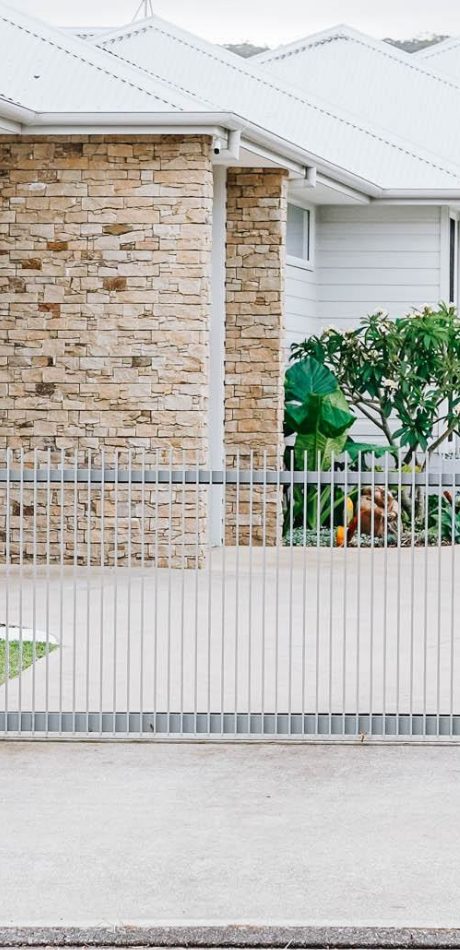
A driveway gate can help deter intruders and add privacy at the front of the property. It can also help contain pets or children inside the yard, and many people like what it does for street appeal. Whether it is worth it comes down to which of those matters most to you.
A few things shape the scope of the work: the material you choose; custom fabrication to suit your opening and design; the size of the opening and site conditions, such as slope or a curved driveway; whether you add automation; any approvals that may be needed. Talk to us about your property and we can work through the details with you.
Under NSW exempt-development requirements, fences and gates on land designated bushfire-prone must use non-combustible materials or hardwood. This applies only to land carrying that designation, so check whether your property is affected before settling on a timber design.
No. Self-closing and self-latching requirements apply to gates forming part of a pool barrier under NSW pool safety law. They do not apply to driveway or garden gates generally.
Electrical wiring work in NSW requires an electrical licence, and wiring a gate motor is electrical wiring work. This applies to the wiring only, not to the fabrication or installation of a manual gate.