Emergency Garage Door Repairs
Our Emergency Garage Door Repairs are for when your garage door suddenly will not open or close. Your car may be stuck inside. Your home may be left open to the street. That is a safety and access problem, not routine maintenance.
These faults often happen with no warning. Storms and strong winds can damage a door and its parts. The coastal air along the Central Coast can also add to wear on metal parts over time.
This page helps you work out if your problem is a true emergency. It also covers what usually goes wrong, and what you can safely do while you wait for help.
Springs and cables are under high tension. Openers are hooked up to power. These are not parts to test or adjust on your own. If your door has failed, get in touch with our team and we can talk it through.
Emergency Garage Door Repairs is one of the services offered by Garage Doors Central Coast Pros.
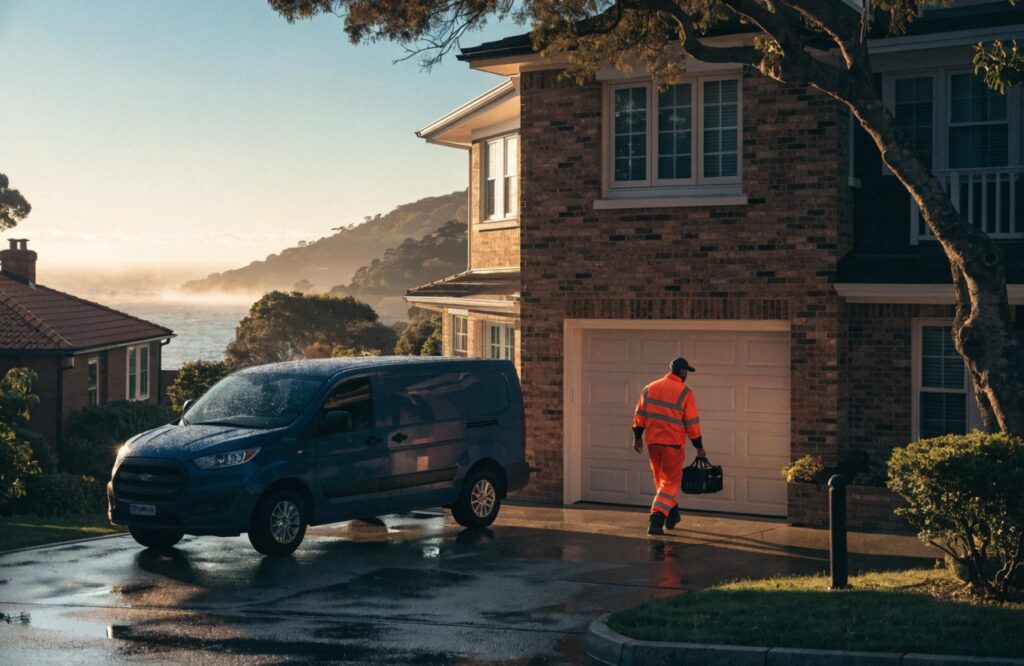
A garage door fault is usually an emergency when it puts your safety, security or access at risk. That includes a door that will not open or close. It also includes a door off its track, or a snapped spring or cable. Not every fault is equally urgent. The main question is whether your home or your car is exposed right now.
These quick checks can help you decide:
If you answered yes to any of these, the job is usually urgent. For many homes, the garage is a main way in. A door you cannot shut is a bigger problem than one that just needs a look at some point.
A door that still opens and closes, with no sudden fault, is usually not an emergency. That kind of work can be booked ahead of time.
The faults above are known urgent problems. They are what this repair service is for. If your door has stopped working the way it should, contact us and tell us what happened.
Most urgent calls come down to a few faults. Knowing which one you have helps you explain it when you call.
Broken springs. Springs hold the weight of the door. Torsion springs sit on a bar above the opening. Extension springs run along the sides. When one breaks, you may hear a loud bang. The door often gets too heavy to lift, or it only moves a little way.
Doors off their track. Rollers can pop out of the track after a knock, or when something shifts out of line. The door may sit crooked, stick part way, or scrape as it moves.
Broken cables. The cables work with the springs to lift and lower the door. A snapped or loose cable can leave the door uneven, stuck, or hanging on one side.
Opener and motor faults. The opener may not respond at all. Or the motor may hum without moving the door. A grinding noise is another sign that something is wrong.
Opener faults can be harder to pin down than a broken spring. The cause may be the motor, the drive parts, the power supply or the controls. This is why these faults usually need to be checked first. Guessing at a part and swapping it out does not work well.
If your door is doing any of these things, contact us and tell us what you see or hear.
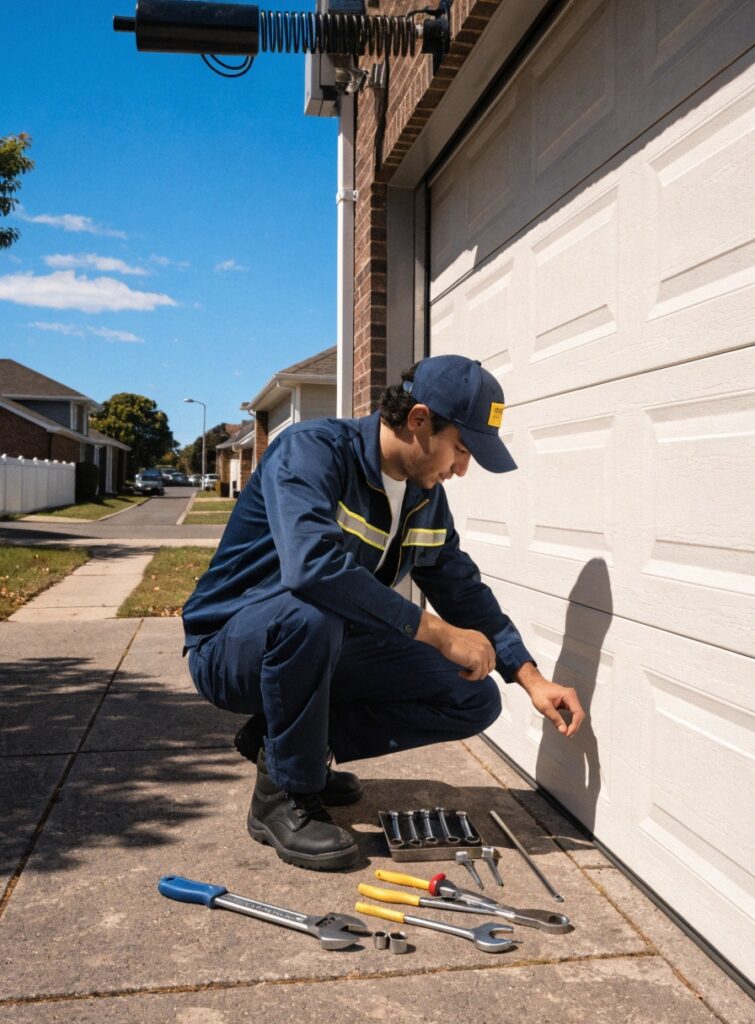
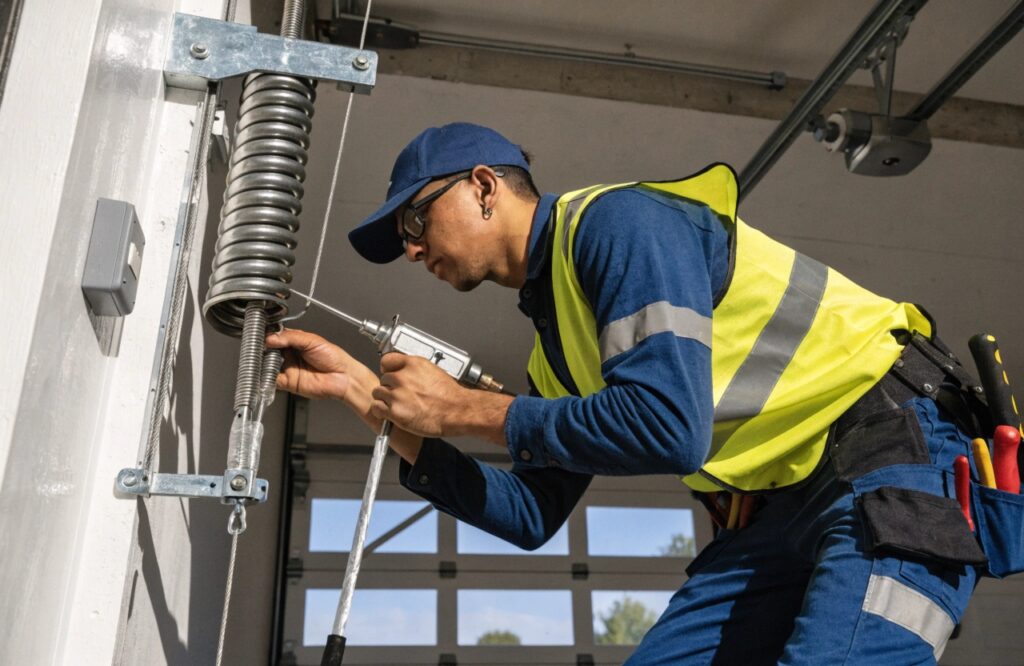
Springs and cables are under high tension. They hold up a door that can be very heavy. That tension stays in the system even when the door is still. Across the industry, these parts are widely flagged as risky to handle without training and the right tools. A spring or cable that lets go can move with real force.
Openers bring a second issue. They run on mains power. In NSW, electrical work must be done by a licensed electrical worker. There is no DIY option there.
A licence can also apply to the repair itself. In NSW, home building work worth more than $5,000 in labour and materials needs a licence. Some garage door repairs may fall above that amount, depending on the job.
There is also a technical standard for the safety of electric garage door drives. It is called AS/NZS 60335.2.95. It sits behind how these systems are designed and checked. That is one more reason to leave powered doors to someone who works on them often.
Before you book any repairer, you can check their licence yourself. Use the NSW Fair Trading Home Building Licence Check. It only takes a moment, and it shows you what the licence covers.
If you want to talk through a spring, cable or opener fault, contact us and we can go from there.
Storms are one reason a door that worked yesterday will not move today. Heavy rain, strong wind and flying debris can all put stress on a door and its parts in a short time.
This is not rare here. The NSW Government confirmed an official disaster declaration for the Central Coast. It followed heavy rain, storms and wind gusts of up to 90km/h. Weather like that can push a door out of line. It can damage panels and parts. It can also cut power, which can leave an opener dead.
Wind pressure is part of it. A big door is a wide flat surface. Strong gusts can strain the tracks, rollers and fixings that hold it in place. Debris blown at the door can do damage in one moment.
Storm damage is also treated as different from slow wear. Australian insurers generally cover storm, wind and hail damage as an insured event. They treat it as separate from wear and tear. What you are covered for still depends on your own policy. It helps to read your product disclosure statement, or talk to your insurer.
If your door failed during or after a storm, contact us. Tell us what the weather did, and how the door is acting now.
Storm damage is sudden. This second local factor is slow. You often only notice it when a part gives out.
The Central Coast is coastal and humid. Makers of these parts point to salt air and humidity as things that can speed up rust on metal. A garage door has plenty of metal in it. That includes springs, tracks, hinges and rollers.
Rust matters because it changes how parts work. A spring that weakens over time can break sooner than it would have. Rollers and hinges can stiffen or wear unevenly. Tracks can pit or roughen, which adds drag each time the door runs.
This is one factor, not a sure thing. Many things affect how long parts last. That includes how often the door is used, how it was fitted, and the materials in it. How exposed a home is can also differ from street to street.
If your door has needed repairs more than once, or a part failed sooner than you expected, contact us. We can look at what is going on with the hardware.
There are a few safe things you can do once a repair is booked.
Use the manual release if you need the door moved. Most doors with an opener have an emergency release cord. It is often a red handle hanging from the opener rail. Pulling it unhooks the door from the motor so you can move it by hand. Do this with the door fully shut where you can. Keep people and cars well clear while you move it.
Stop if the door feels heavy or will not budge. A door with a broken spring or cable can be very heavy. It may not be balanced. Forcing a stuck door can make the damage worse. If it does not move easily by hand, leave it alone.
Secure the garage if it is open. Move valuables, tools and bikes out of sight if you can. Lock the inside door between the garage and the house. If a car is inside and you can reach it, lock that too.
Leave springs and cables alone. These parts stay under tension even when the door is still. Do not try to adjust, unwind or tighten them. The same goes for opening up an opener that is connected to power.
If you are not sure what is safe to touch, contact us first. Tell us about the fault before you do anything with the door.
It usually is when it puts your safety, security or access at risk. A door that will not open or close, a door off its track, or a snapped spring or cable all count. In each case you cannot lock up the garage, or you cannot get to the car inside. Faults that do not stop the door working are usually less urgent and can be booked in.
Springs and openers are the causes named most often across industry sources. A broken spring usually stops the door moving right away. An opener fault can leave the motor silent, humming or grinding without lifting the door.
Often you can, using the manual release cord that unhooks the door from the opener. That lets you move the door by hand for now. If the door feels heavy, uneven or jammed, stop there. Forcing a stuck door can cause more damage, and it is not safe.
Springs and cables are widely seen as risky to handle without training and the right tools. They stay under high tension even when the door is not moving. Most people are better off leaving these parts to someone who works with them often.
Repair is often possible. It depends on how bad the damage is and where it sits on the door. Some panels can be fixed. Heavier damage may mean the panel needs replacing. Someone needs to look at it before that call can be made.
Australian insurers generally cover storm, wind and hail damage. They treat it as separate from wear and tear. Whether your own claim is covered depends on your policy, its exclusions and your excess. Check your product disclosure statement, or speak with your insurer.