When mains power goes out, an automatic garage door opener stops working. Until the power comes back on, Central Coast homes can lose easy access to the garage.
A battery backup is designed for exactly that situation. It lets an existing opener keep working through a power cut, so the door can still be opened and closed without going to the manual release.
On this page we explain what garage door battery backup installation involves, how to work out whether your current opener can take one, and what a backup can and cannot do during an outage. We also cover battery lifespan and the signs that a backup needs replacing.
Battery backup installation is one part of what we do as a garage door supplier on the Central Coast.
If you would like to know whether your opener is suitable, get in touch with our team to talk it through.
Battery backup installation means supplying and fitting a battery pack to your existing garage door opener. Some openers use an integrated battery designed for that model. Others use an add-on kit that connects to the opener you already have.
The battery connects to the opener's existing control board and low-voltage circuit. It does not involve household mains wiring or new power points.
A typical installation covers mounting the battery unit, connecting it to the opener, charging it for the first time and testing that the door runs on battery power.
This service is separate from installing a new opener. It is also separate from general garage door repair work such as springs, cables, panels or tracks.
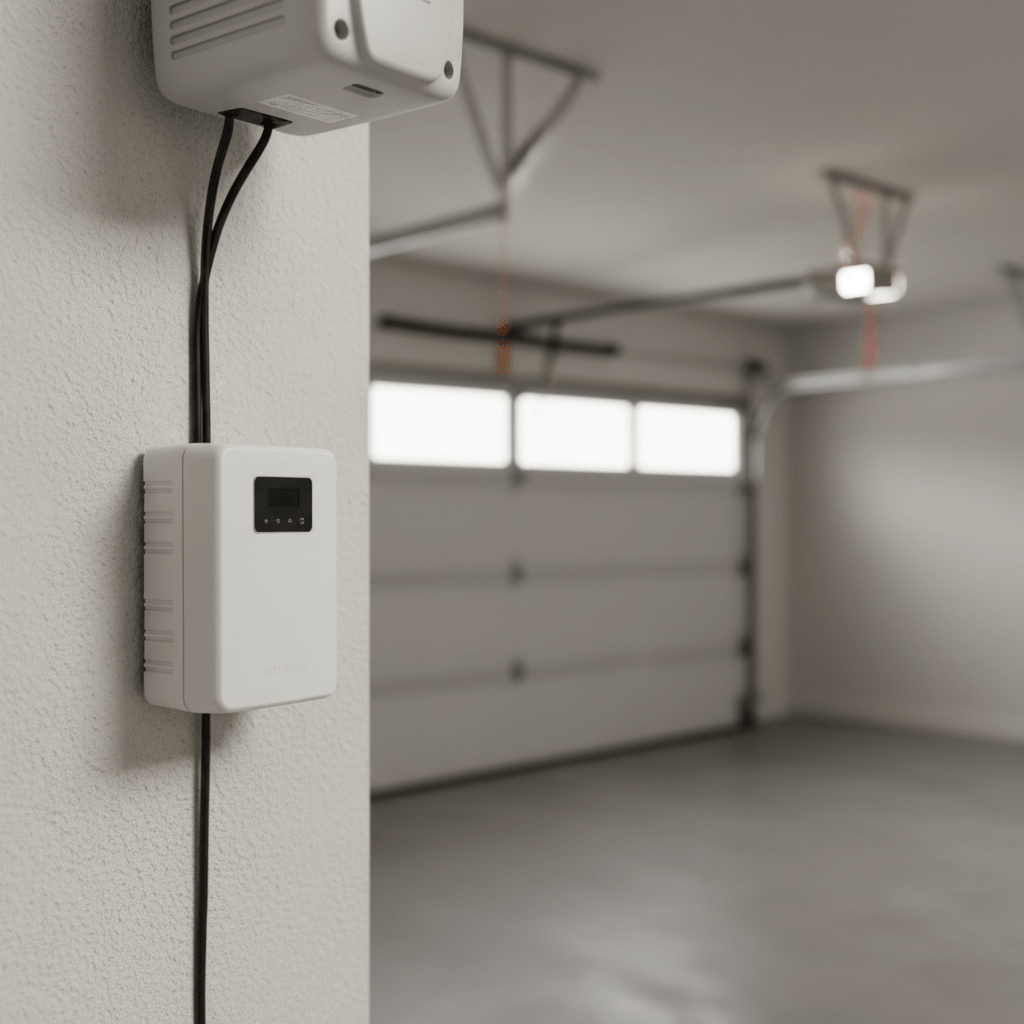

Not every existing opener accepts an add-on backup kit. Compatibility depends on the brand and model you already have, so this is the first thing to check.
Some openers are built with a battery bay designed for that model. Others need a retrofit kit that mounts separately and connects to the opener. There are often genuine manufacturer options and aftermarket options, and the choice can affect how the unit fits and connects.
A few things can affect suitability and how involved the job is:
Brand can also play a part. Openers from makers such as B&D, Merlin and ATA differ in how they are built, so compatibility is checked against the specific model rather than assumed.
If you are not sure what you have, contact us with your opener details and we can look at your options.
Power outages are a known part of life on the Central Coast. Central Coast Council's own emergency preparedness guidance lists loss of power as a consequence of storms, bushfires, flooding and heatwaves in the region, and asks residents to plan for it (Central Coast Council plan and prepare guidance).
Manufacturers make the connection directly. Battery backup products for garage door openers are designed for blackouts and the storm and flood events that cause them.
For a home with an automatic opener, that comes down to access. When the power is out, the door will not run on its own, and a car in the garage stays there until the door is opened another way. A battery backup is one way to keep that access during the outage.
A battery backup gives you a limited number of open and close cycles per charge, not unlimited use. The exact number can vary by brand and model. Australian manufacturer figures, such as those published by B&D, indicate a small number of full cycles per charge — typically lower than some overseas figures you may see online.
It helps to think of a backup as enough to get the car out and the door closed again, rather than normal use until the power returns. Once the charge is used, the opener will not run on battery until mains power comes back and the unit recharges.
Without a backup fitted, the manual release cord is the standard fallback on an automatic opener. Pulling it disconnects the door from the opener so it can be moved by hand. That still works, but it means operating the door manually and reconnecting it afterwards.
A backup battery does not last forever. Like any rechargeable battery, it has a finite lifespan and will eventually need replacing.
The useful part is that a battery usually gives you warning before it stops working. Common signs include the opener running fewer cycles on battery than it used to, the door moving more slowly on backup power, a warning light or beep on the opener, or the unit not holding a charge between outages.
Picking up on those signs early matters, because a backup is only tested when you need it. Checking the battery from time to time, rather than waiting for the next power cut, helps you avoid finding out it has failed at the worst moment.
Replacement is a separate consideration from the first installation. If you already have a backup fitted and think it may be reaching the end of its life, get in touch and we can look at replacement options for your opener.
A battery backup connects to the opener's existing control circuit, and the unit itself needs to be mounted securely. Both of those benefit from professional fitting, because the connection has to be correct for the backup to work when it is actually needed.
The compatibility check is the other part. Working out whether a particular opener takes an integrated battery or a retrofit kit, and which option suits it, is easy to get wrong from a product listing alone. A kit that does not match the opener may not connect properly, or may not fit the space available.
A DIY attempt carries the risk of an incorrect compatibility assessment or a faulty connection. The result can be a backup that appears to be installed but does not run the door during an outage.
If you would like the work handled for you, contact our team to discuss your opener and arrange installation.

Many existing openers can take an add-on battery backup kit, but not all of them. It depends on the brand and model, and whether that opener is designed to accept an integrated battery or a separate retrofit kit. The compatibility check should be done before ordering anything, so the kit matches the opener you already have.
That depends on how you use your garage. Without a backup, the manual release cord is still there as a fallback, so the door can be opened by hand during a power cut. A battery backup is not the only way to get the door open. What it changes is whether the opener keeps running for a limited number of cycles, so the door can be operated normally instead of manually. If losing automatic access during an outage would be a problem for your household, it is worth looking at.
Lifespan varies by battery type, brand and how often the backup is used. Rather than relying on a set number of years, it helps to watch for the early signs — fewer cycles per charge, slower door movement on battery power, a warning light or beep, or a unit that no longer holds charge. Acting on those signs helps you avoid finding out the backup has failed during an actual outage.
Yes. Automatic openers are fitted with a manual release cord, usually a cord with a handle hanging from the opener rail. Pulling it disconnects the door from the opener so it can be lifted and lowered by hand. This is the standard fallback and is separate from battery backup. The difference is that it requires manual operation, and the door needs to be reconnected to the opener once the power returns.
Check the opener unit itself rather than assuming either way. Some models house the battery inside or alongside the powerhead, and many have an indicator light or status light showing battery condition. The manual for your opener model will confirm whether a battery is fitted or is an available option. If you are unsure after checking, contact us with the brand and model and we can help you work it out.
We found no NSW or Australian law requiring battery backup on residential garage door openers. You may come across references to California's SB-969, which introduced a battery backup requirement in that US state. It applies in California only and does not apply here. Battery backup on the Central Coast is a choice about access during outages, not a compliance obligation.
We will provide all of your garage door sales and installation needs and wants. From consultations to a free measure and quote process to the full sales and installation service, you are guaranteed to have a great experience with us.
Please give us a call on (02) 4306 7980 to arrange an on-site meeting. Together we can arrange for us to meet your garage door needs on the Central Coast NSW.