Salt air and changeable weather take a toll on garage doors across the Central Coast.
Salt air and changeable weather take a toll on garage doors across the Central Coast. This page covers the door types available, the signs your door needs replacing, and what installation day looks like. As your local Garage Door Supplier, we help you choose residential garage doors in Central Coast NSW that suit your home, and we can inspect your current door first.
Residential garage doors come in three main types: sectional, roller and tilt. Each type opens in a different way and uses the space inside your garage differently. We supply and install all three across the Central Coast.
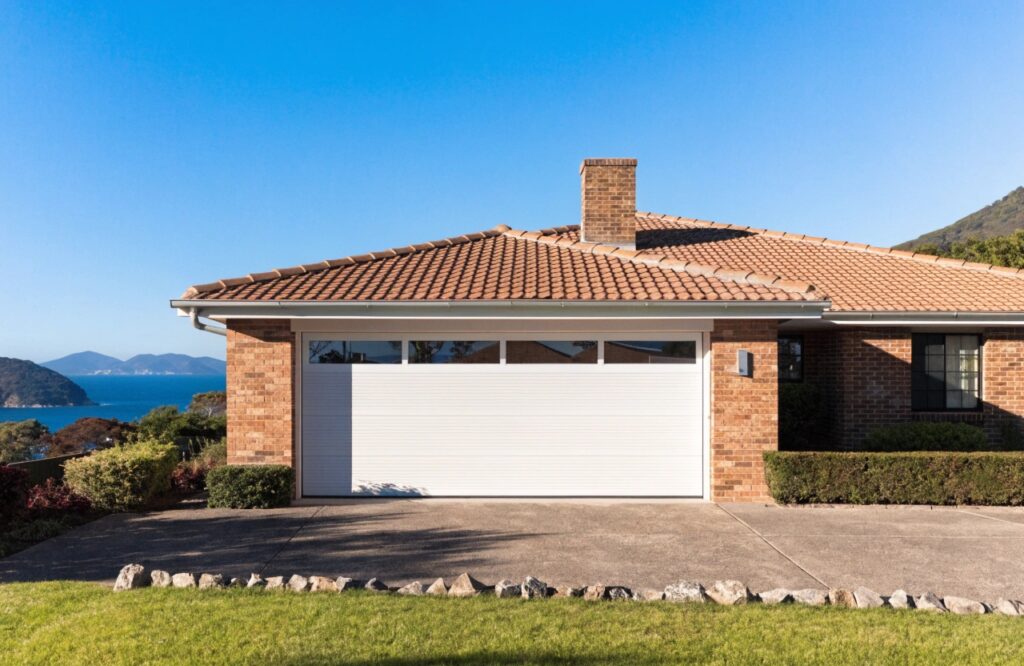
Most garage doors give you warning before they stop working. Listen for grinding or squealing as the door moves. Watch for panels that sag, bow or sit unevenly when the door is closed.
A door that hesitates, jerks or takes longer than usual to respond is also telling you something. So is one that keeps needing the same part fixed.
Near the coast, salt air and humidity can bring on rust along tracks, hinges and fixings. Surface rust is worth checking early, because it is easier to deal with before it spreads through the moving parts.
If you notice these signs, get the door looked at rather than waiting for it to stop altogether. We can inspect it and tell you what we find.
Start with how the door opens and where it goes. A sectional door lifts and stores flat under the garage ceiling. A roller door winds up into a drum above the opening. A tilt door swings up and back as one solid panel, so it needs clear space in front.
Then think about the look. The door is one of the largest things people see from the street, so panel style, colour and finish matter.
Material is the third choice. Close to the water, it is worth looking at rust-resistant options such as aluminium alongside steel and timber.
Tell us how you use the garage and what you want it to look like, and we will walk you through the options we supply.
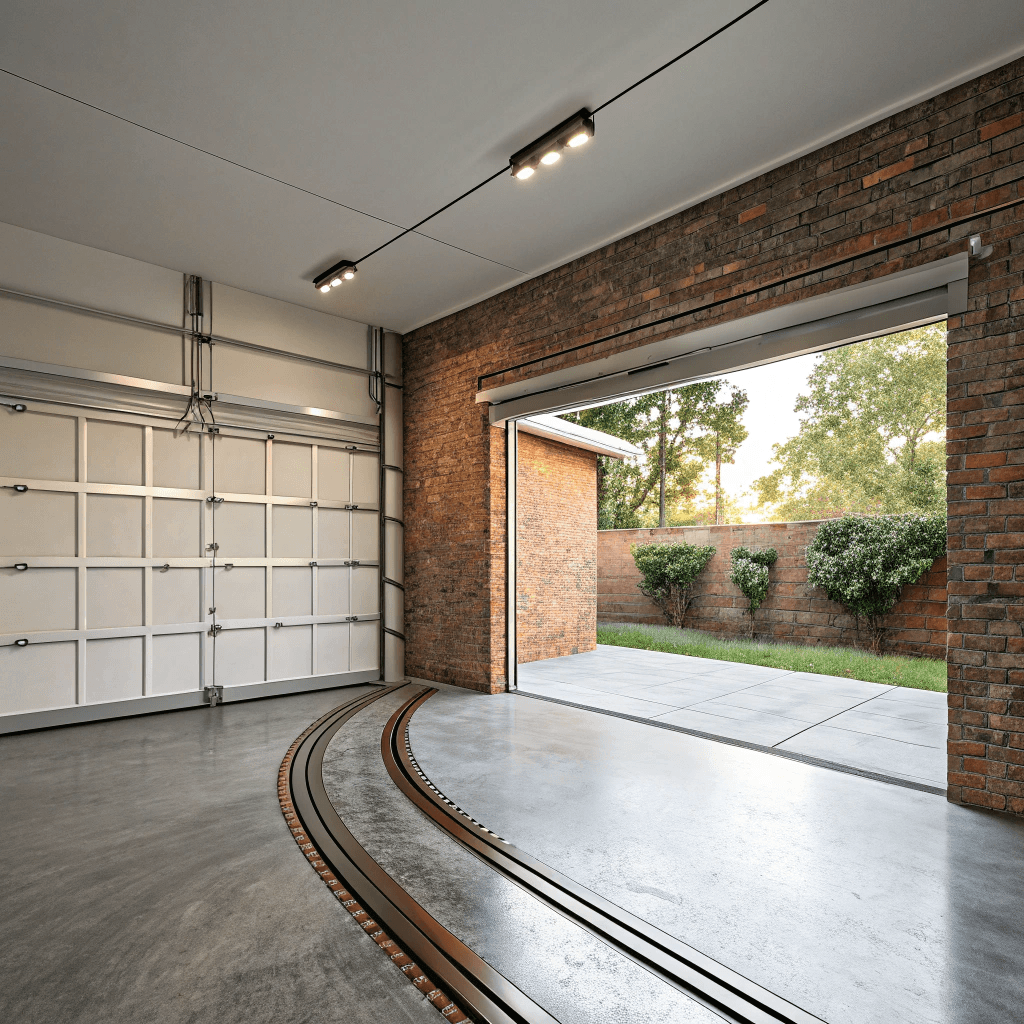
Before install day, clear a working area. Move cars, bikes, bins and storage away from the door and out of the garage entrance. Anything stored along the side walls should be shifted back so there is room for tools and ladders.
Check your power. A new motor needs a power point within reach of the opening, so point out where yours sits if you have one.
Let us know about the door frame too. Some older homes around Woy Woy and Terrigal have frames that need adjusting before a new door goes on. Flagging it early means we can plan for it instead of finding it on the day.
If you are still weighing up repair against replacement, talk it through with us first.
We start by taking the old door out. That means releasing the spring tension, removing the panels or curtain, then stripping the tracks and brackets from the frame.
Next comes the new hardware. Tracks and fixings go on first, then the door itself, panel by panel or as a rolled curtain. The springs are fitted and set so the door carries its own weight evenly.
If you are having a motor, it goes in after the door is hanging true. Remotes and safety sensors are set up at the same time.
We finish with safety testing and a clean-up of the work area.
Coastal wind can affect what is safe to lift, so we keep an eye on the forecast and plan around it.
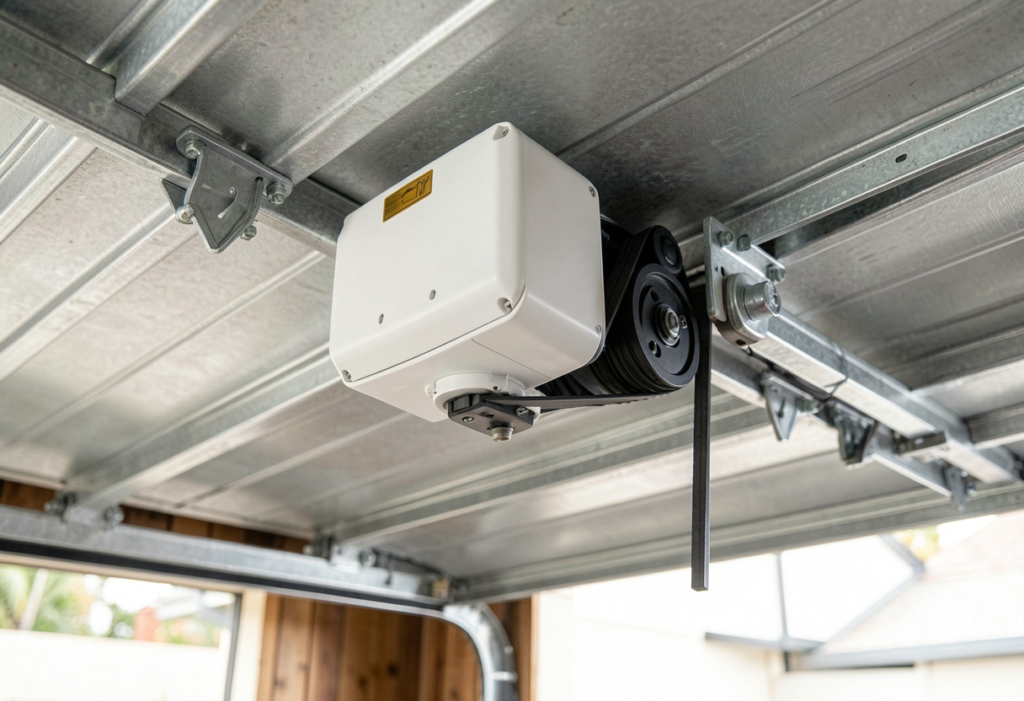
Before we leave, run the door yourself. Open and close it fully. The movement should be smooth and even, with no grabbing, jerking or sudden drops.
Check the balance. With the motor released, a balanced door should hold its position partway open instead of sliding down or springing up.
Test the safety sensors. Pass an object through the beam while the door is closing and it should stop and reverse.
Look along the closed door as well. Panels should sit level, the seal should meet the floor along its whole width, and the gaps at the sides should be even.
Near the water, we pay extra attention to the sensors and seals. Ask us anything before you sign off.
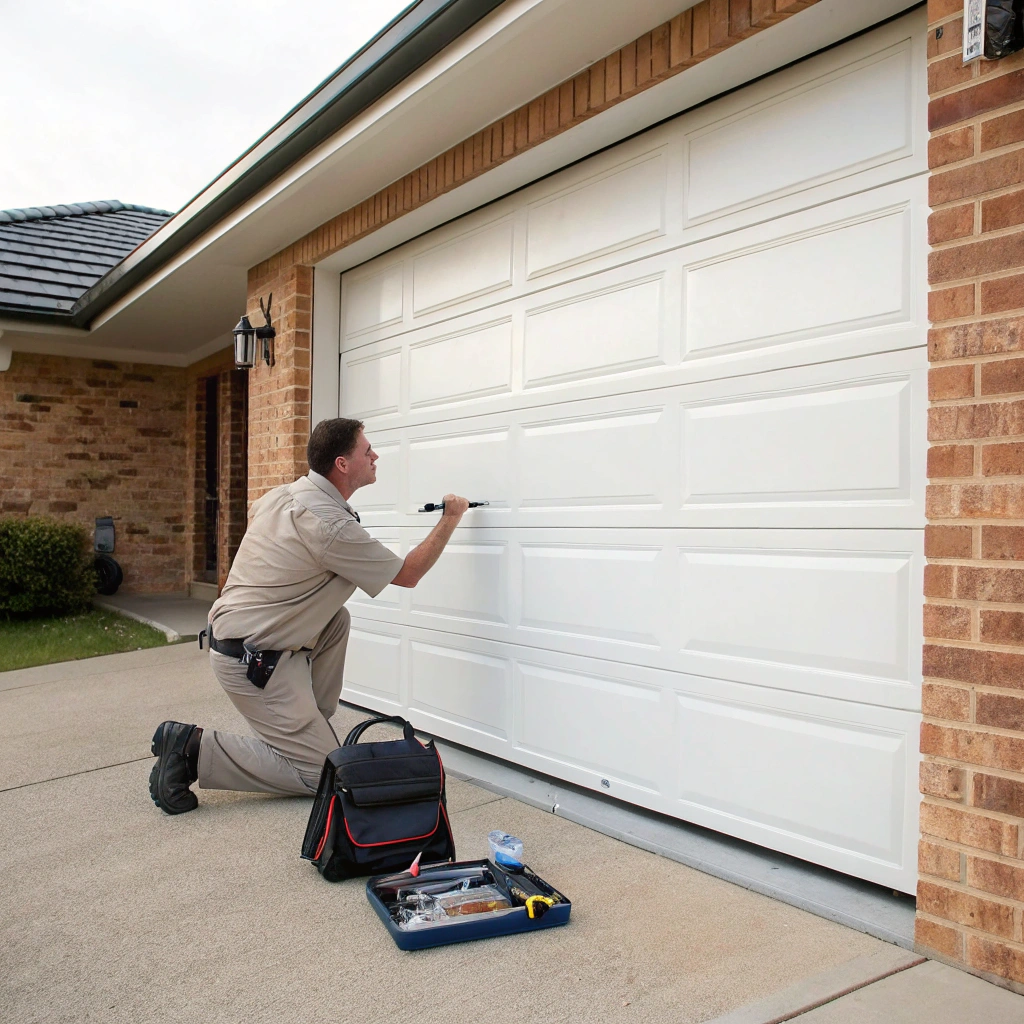
A new door lasts longer with a little upkeep. Rinse the outside with fresh water now and then to wash off salt spray, then dry it or let it drain. Clean the tracks so grit and leaves do not build up.
Keep the moving parts lubricated. Hinges, rollers and springs work better when they are not running dry.
Check the metalwork every few months. Look at hinges, brackets, fixings and the bottom of the panels for early rust or paint damage, and deal with small spots before they spread.
In beachside suburbs such as Terrigal, hinges are worth checking more often.
If something looks worn, get in touch and we will take a look.
A quality garage door will often last around 15 to 20 years when it is looked after. Regular cleaning, lubrication and early attention to rust all help. Coastal conditions make that upkeep more important, so build the checks into your routine.
Book a professional. Garage doors are heavy and the springs hold a lot of tension, which makes DIY installation risky. A trained installer is faster and safer, and the door is set up and tested properly from the start.
The usual signals are repeated repairs, panels that sag or bow, and rust through the door or its hardware. If you are fixing the same problem again and again, replacement is worth discussing.
Age and repair history guide the decision. A newer door with a single fault is usually worth repairing. An older door needing frequent work often makes more sense to replace. We can inspect yours and talk you through both options.
Most residential installs are completed in a single day. Removing the old door, fitting the new one, setting the springs and running safety tests all happen in the one visit.
Your home's style and how exposed it is to the coast both shape the answer. Sectional, roller and tilt doors each open differently and suit different spaces, and material choice matters more the closer you are to the water. Tell us about your garage and we will go through the options.
Ready to move forward, or still deciding? Get in touch with Garage Doors Central Coast Pros and we will go through the options with you.
Call us on (02) 4306 7980 to discuss your garage door.