If your garage door is rusting, damaged or no longer working properly, Colorbond garage door installation is one option worth looking at.
If your garage door is rusting, damaged or no longer working properly, Colorbond garage door installation is one option worth looking at. It is also a common choice for homeowners updating the front of their house during a renovation.
Most people reach this point for one of two reasons. Either the door has a real problem — rust, damage, or a mechanical fault in the springs, panels or opener. Or the door still works, but it lets down the look of the home.
This page walks you through the Colorbond door types you can choose from, what happens during a professional installation, and how to weigh up repairing an old door against replacing it. It also covers two things worth knowing about on the Central Coast: keeping a door clean in a coastal setting, and checking whether your property sits on bushfire-prone land.
If you would like to talk through your own garage, get in touch with our team at Garage Doors Central Coast Pros and we can discuss your options and provide a quote.
COLORBOND® steel is prepainted steel made by BlueScope. The steel base is given a metallic coating, then a baked-on paint finish is applied in the factory rather than after the door is installed.
That process is covered by two Australian Standards. AS 1397:2021 sets out the requirements for metallic-coated steel, and AS/NZS 2728:2013 covers prepainted steel products. So a door built from COLORBOND® steel starts with material made to published national standards.
The factory-applied finish is made to stand up to weather and keep its appearance over time, which is part of why the material is so widely used on garage doors, roofing and fencing.
There is also a broad colour range to pick from. That gives you room to match the door to your roof, gutters, fence or window frames, or to pick a contrast that suits the front of the house.
Colorbond garage doors come in three main types, and they differ in how they open.
Because each type moves differently, each one needs a different amount of space around the opening. A sectional door uses room above the opening and along the ceiling. A roller door needs space for the drum above the door. A tilt door swings outward as it opens and relies on the side arms beside the opening.
This is why the opening should be measured before you settle on a type. The measurements tell you how much headroom and side room you have to work with, and which doors will fit the garage you already have.
Colour and finish are the other part of the decision. Once you know which type suits the opening, you can choose from the Colorbond range and match or contrast the door with the rest of the house.

Most installations follow a similar path, so you can picture how the job will run.
It starts with measuring. We check the width and height of the opening, along with the headroom above it and the room on either side. Those numbers tell us which door types will work in your garage.
Next comes the choice of door. You settle on the type — sectional, roller or tilt — and pick the colour and finish you want from the Colorbond range.
On installation day, the old door is removed first if there is one still in place. The opening is then prepared for the new door.
The new door goes in next. Depending on the type, that means fitting the tracks, then the panels or the curtain, followed by the springs and the seals. Each part is adjusted so the door sits square in the opening and moves smoothly.
An automatic opener is an optional extra rather than part of every job. If you want one, the motor and the safety sensors are fitted and set up once the door itself is in place. If you would rather keep the door manual, that is fine too.
Plenty of garage door faults can be fixed. A new door is not always the answer, and it helps to know which situation you are in before you call anyone.
A few things point towards replacement rather than another repair:
The other reason to replace a door has nothing to do with faults. If you are renovating, repainting or reworking the front of the house, the garage door is often the largest single surface people see from the street. Changing it is a design decision as much as a maintenance one.
This is general guidance rather than a diagnosis of your door. The only way to know for certain is to have the door looked at, since the same symptom can have different causes.
If you are unsure which way to go, get in touch and we can talk through what you are seeing.
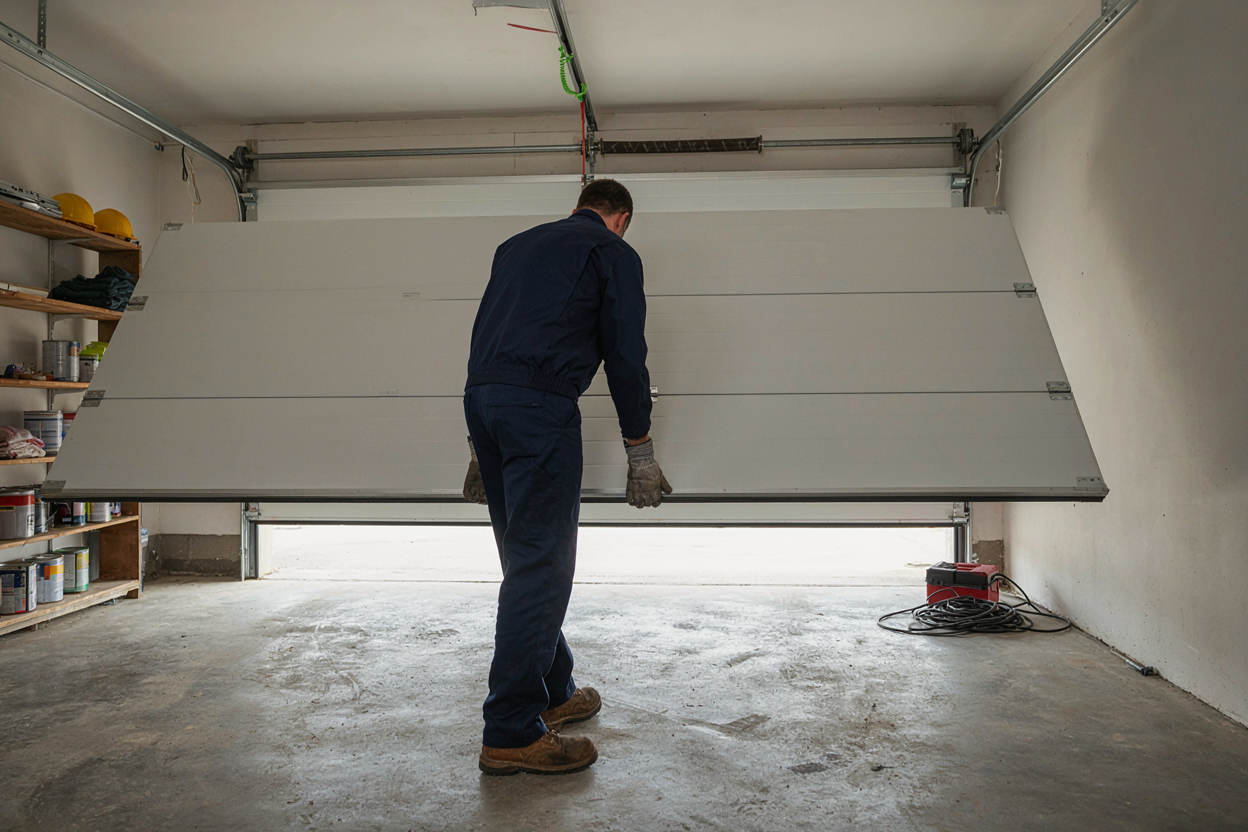
A garage door is a large, heavy object held in balance by springs under high tension. Those springs store a lot of energy. If one is released or handled the wrong way, it can cause serious injury, and so can the moving panels, tracks and cables while the door is being fitted or adjusted.
That is the main thing to weigh up before taking on the job yourself. The risk sits in the parts that make the door move, not in the door panel itself.
Automatic openers bring a second set of requirements. Under AS/NZS 60335.2.95, the safety standard covering garage door openers, an automatic door has to include entrapment protection. That usually means photo-electric sensors across the opening and an auto-reverse function, so the door stops and backs off if something is in the way. These devices also need to be positioned and tested properly to work as intended.
Professional installation is the safer route for most people. It puts the spring work, the balancing and the safety device setup in the hands of someone who does it regularly and knows the standards that apply.
If you would like the job handled for you, contact our team to discuss your door.
Two local factors are worth knowing about before you settle on a new garage door.
Coastal exposure and washing
The Central Coast has around 80 kilometres of coastline, so a lot of garages sit within reach of salt-laden air. Technical guidance for prepainted steel recommends that surfaces which are not washed by rain — sheltered areas, or sections under an eave or awning — be washed more often in coastal areas than the standard six-monthly guidance, at roughly three-monthly intervals.
Washing is simple. Clean water and a soft brush or cloth over the door surface, paying attention to the sheltered spots, is generally all that is involved. Our page on Colorbond garage doors in Magenta looks at salt-air exposure for homes near Magenta Shores.
Bushfire-prone land
Many properties across the Central Coast are mapped as bushfire-prone land. AS 3959, the standard covering construction in bushfire-prone areas, includes requirements for garage and vehicle access doors at each Bushfire Attack Level.
This is not a blanket Central Coast rule. What applies to your garage depends on the Bushfire Attack Level assessed for your own property, so it is worth checking before you order a door. The NSW Rural Fire Service publishes a BAL Rating Fact Sheet that explains what the ratings mean and how they are worked out.
If your property is affected, it is something to raise early, since it can shape which door you choose.
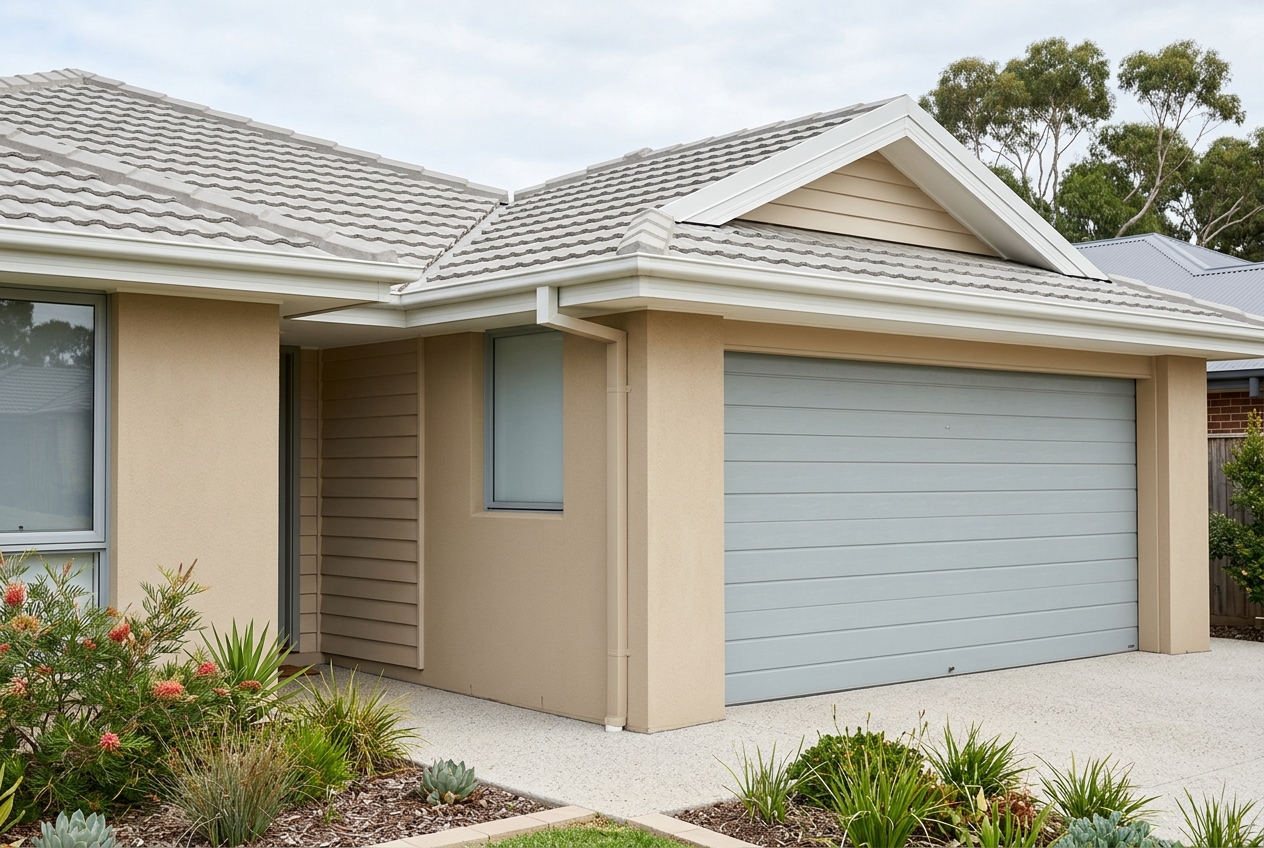
Often, no. Replacing an external door like for like may qualify as exempt development under the NSW Codes SEPP, which is the framework that lets minor work go ahead without a development application. It is subject to conditions, though. A heritage listing, land mapped as bushfire-prone or flood-prone, or enlarging the opening itself can all change the outcome. Because it depends on your own property, it is worth checking your situation with Central Coast Council or a planning professional before the work is booked.
It can be. AS 3959, the standard for construction in bushfire-prone areas, sets out requirements for garage and vehicle access doors at each Bushfire Attack Level. What applies to your garage depends on the BAL assessed for your site, not on a blanket Central Coast rule. The NSW Rural Fire Service BAL Rating Fact Sheet explains how the ratings work and is a good starting point for checking your own property.
You can, but there is real risk involved. Garage door springs hold a large amount of tension, and the panels, cables and tracks are heavy moving parts. Mishandling any of them can cause serious injury. If you are fitting an automatic opener, it also has to include entrapment protection under AS/NZS 60335.2.95, which covers safety devices such as photo-electric sensors and auto-reverse. For most people, professional installation is the safer option.
There is no single figure that fits every door. How long one lasts depends on the material it is made from, how often the door is used, and how well it is maintained. A door opened several times a day works harder than one used twice a week. Regular cleaning, and keeping an eye on the springs, tracks and seals, both play a part in how long a door stays in good working order.
Most faults fall into a few groups:
A door that has more than one of these at once is often a candidate for replacement rather than another repair.
Two standards are the main reference points. AS/NZS 4505 covers garage doors and other large access doors, including design, installation, and requirements around wind and corrosion. AS/NZS 60335.2.95 covers automatic openers, including the entrapment protection that stops a powered door closing on a person or object. Together they form the general compliance basis for doors and openers in Australia.
We will provide all of your garage door sales and installation needs and wants. From consultations to a free measure and quote process to the full sales and installation service, you are guaranteed to have a great experience with us.
Please give us a call on (02) 4306 7980 to arrange an on-site meeting. Together we can arrange for us to meet your garage door needs on the Central Coast NSW.