We supply, replace, pair and troubleshoot garage door remote controls on the Central Coast, working with the opener you already have.
A garage remote that is lost, broken or no longer responding turns a simple daily routine into a problem. You might also want a spare for another driver in the household, or need the old remotes cleared after moving into a new place.
We supply, replace, pair and troubleshoot garage door remote controls on the Central Coast, working with the opener you already have. Remote controls are one part of what we do as a garage door supplier on the Central Coast.
This page walks you through the main things people want to know. Which remote suits your opener. How a genuine brand remote compares with a universal one. What actually happens when a new remote is paired to your system.
Once you know which remote fits your opener, the next step is getting it sourced and paired correctly. Get in touch to talk through your setup.
Most enquiries about remotes start with one of a few familiar situations.
A remote goes missing. It falls out of a bag, gets left in a car that has been sold, or simply cannot be found. Others get dropped, driven over or damaged until the buttons stop working properly.
Sometimes a remote stops responding without any obvious damage. This may come down to a flat battery, a range issue, or the pairing between the remote and the opener rather than a fault with the remote itself. Working out which one it is helps you avoid replacing a remote you did not need to replace.
Moving into a new home or rental raises a different concern. You may not know how many remotes exist for the door, or who still has one. Clearing the old remotes and pairing new ones puts you back in control of who can open the garage.
Other people simply want an extra remote. A second driver, a second vehicle, or one kept inside the house so you are not left waiting when the usual one goes missing.
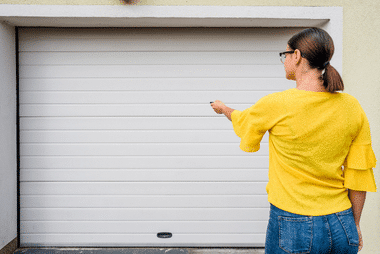
Not every remote will work with every opener. The starting point is your existing opener — its brand and model, and the code system it uses. That information usually appears on the motor unit itself, and it is what determines which remotes can be paired to it.
From there, you generally have two paths.
Genuine remotes are made by the opener’s manufacturer for that brand’s systems. B&D’s Tri-Tran+ remotes are one example, designed to work with B&D openers that use that system. Because they are built for the brand, compatibility is the more certain option, particularly with legacy openers.
Universal remotes are designed to work across multiple major garage door opener brands. They can be a practical choice when a genuine remote is harder to source, though coverage is brand-dependent and not guaranteed for every model.
Yes. Universal remotes exist and are designed to work across multiple major garage door opener brands. Coverage is not guaranteed for every model, so compatibility still needs to be checked against your specific opener. For some openers, particularly older systems, a genuine brand-specific remote remains the more certain option.
Your choice can also affect what the remote costs and how easily it can be sourced. Genuine remotes typically come through the manufacturer or an authorised supplier, while universal options are more widely available.
If you are unsure what you have, tell us the brand and model on your opener and we can work out which remotes suit it.
There is a technical reason behind most compatibility questions, and it is worth understanding in plain terms.
Current garage door systems typically use rolling code technology, often combined with multi-frequency encryption. Rather than sending the same signal every time, the remote and the opener move through a changing sequence of codes that both sides keep in step with. B&D’s Tri-Tran+ system works this way.
This is why a remote generally cannot just be swapped in or copied. The remote has to be paired to the receiver so the two share the same code sequence.
Older systems worked differently. Fixed-code and DIP-switch remotes used a set code, often chosen with small physical switches inside the remote. These older systems are generally not backward-compatible with newer remotes, so a current remote will not usually pair with a legacy opener.
If your opener has been in place for a long time, a compatibility check before sourcing a remote can save you buying something that will not work with it.
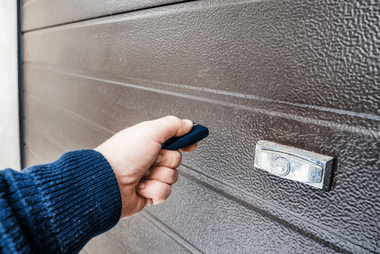
Pairing a new remote is a straightforward process, and it helps to know what it involves before you book.
Your opener has a receiver, which is the part that listens for the signal from your remote. The receiver is put into learn mode, sometimes called program mode. The new remote is then triggered so the receiver records it and recognises the signal from that point on.
The work is done with your existing opener. The motor unit stays where it is and keeps running as it did before. What changes is which remotes it will respond to.
If you need more than one remote, additional remotes can generally be added to the same receiver. That covers a second driver, another vehicle, or a spare kept inside the house.
Tell us how many remotes you need paired and we can sort it out in the one visit.
Adding a new remote does not, on its own, stop an old one from working. If a remote has been lost or stolen, it can generally still open your door until it is removed from the receiver’s memory.
Clearing the receiver deals with that. The stored remotes are wiped, and only the remotes you currently hold are paired back in. Anything unaccounted for no longer works.
This matters most when a remote goes missing and you have no idea where it ended up. It is also worth doing when you move into a new home or rental, where you may not know how many remotes are out there or who still has one.
Clearing old remotes is a different job from simply adding a spare. If security is your reason for calling, let us know, so the old remotes are cleared rather than left in place alongside the new one.
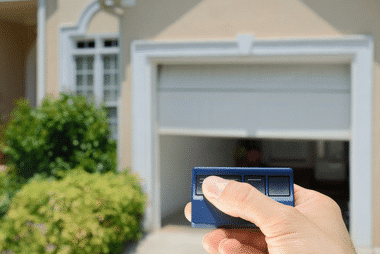
Some remote replacements are a reasonable DIY job. If your opener is a current-generation system, you know the brand and model, and you only need a single remote, buying one yourself and following the pairing instructions may be all it takes.
Other situations are less predictable.
Legacy openers are the common sticking point. If the system is older, or you are not sure what code system it uses, a compatibility check first can save you buying a remote that will not pair. The same applies when you have already tried to program a remote and it has not worked.
Professional help is also more relevant when you need several remotes paired, or when you want old remotes cleared from the receiver for security reasons.
One thing worth knowing about buying online or in store. Retail and marketplace listings often describe remotes as compatible with a brand rather than being confirmed genuine remotes from the manufacturer. Compatible remotes can work, but the wording is not a guarantee for your particular model.
If you would rather not guess, send us your opener details and we can handle the sourcing and pairing for you.
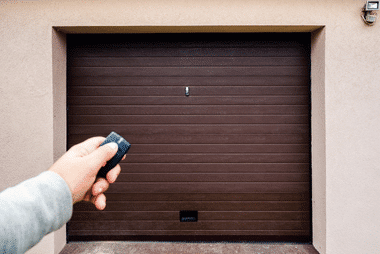
Often, yes. A remote can usually be purchased on its own, but buying it is only part of the job. The remote still needs to be paired to the receiver on your existing opener before it will work. If your opener is a current-generation system and you know the brand and model, self-pairing may be straightforward. Legacy openers, or systems where compatibility is uncertain, are the cases where professional help is generally more useful.
Compatibility comes down to matching your opener’s brand and model, and the code system it uses. The details are usually printed on the motor unit itself, so that is the starting point. Older openers using fixed-code or DIP-switch technology are generally not backward-compatible with newer remotes, which is why checking the existing opener details first matters. If you are unsure what you are looking at, tell us what is written on the unit and we can work it out from there.
Genuine remotes are made by the opener’s manufacturer for that brand’s own systems, such as B&D’s Tri-Tran+ remotes. Universal remotes are designed to work across multiple major garage door opener brands. Coverage is brand-dependent and not guaranteed for every model, so a universal remote still needs to be checked against your specific opener. For some systems, particularly legacy ones, a genuine remote remains the more certain option.
Pairing is done through the receiver on your opener. The receiver is put into learn mode, sometimes called program mode, and the new remote is triggered so the receiver records its signal. The exact steps vary between brands and models, and some systems are more involved than others. Your opener’s documentation will set out the method for your particular unit, or we can pair the remote for you.
Remotes described as compatible with major brands may be available through retail outlets and online marketplaces. Genuine brand remotes are typically sourced through the manufacturer or an authorised supplier. The distinction is worth knowing, because a listing described as compatible is not the same as a confirmed genuine remote for your model.
Phone control is a separate thing from a handheld remote. It relies on a smart or Wi-Fi control accessory added to the opener, rather than a remote paired to the receiver. That sits outside the scope of our remote control service, which covers supplying, replacing, pairing and troubleshooting handheld remotes for your existing opener.
We will provide all of your garage door sales and installation needs and wants. From consultations to a free measure and quote process to the full sales and installation service, you are guaranteed to have a great experience with us.
Please give us a call on (02) 4306 7980 to arrange an on-site meeting. Together we can arrange for us to meet your garage door needs on the Central Coast NSW.